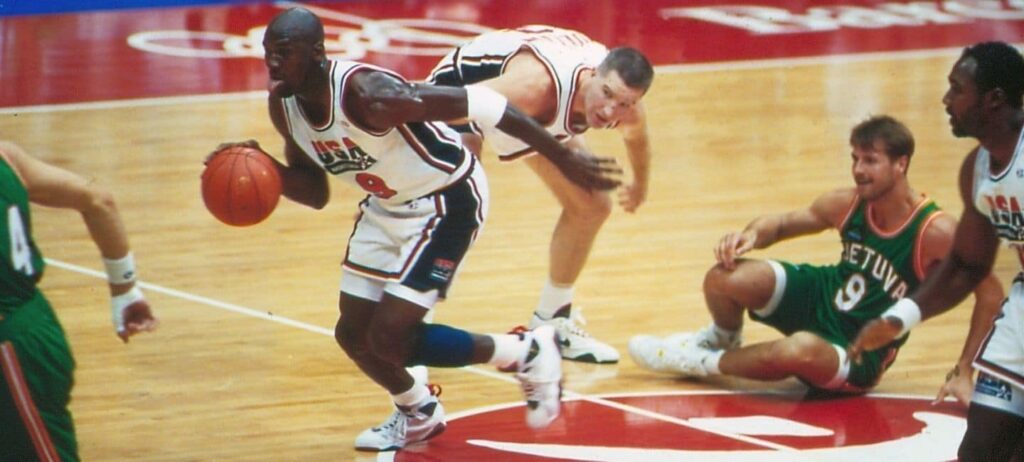
olympic sports basketball
Through its storied history, the journey of olympic sports basketball reflects broader societal changes and showcases the universal language of sports that unites people worldwide mm 88.
The Rules and Gameplay of olympic sports basketball
Understanding the rules and gameplay of Olympic basketball is essential for appreciating the sport’s complexity and intensity. While the fundamentals remain consistent with traditional basketball, certain modifications cater to the unique Olympic environment.
Game Structure and Format
Olympic basketball games are played in four quarters, each lasting ten minutes. This slight deviation from the standard twelve-minute quarters in the NBA allows for a faster-paced, high-energy experience, keeping viewers engaged and anticipating every move.
The game’s flow is dictated by a shot clock, which gives teams a limited window (14 seconds) to attempt a shot after gaining possession. This rule encourages aggressive play and quick decision-making, placing a premium on strategy and teamwork.
In addition to the standard scoring system—two points for field goals, three points for shots beyond the arc, and one point for free throws—teams must also be adept at defensive strategies. Foul limits come into play, requiring athletes to balance aggression with discipline, ensuring the game maintains its integrity while maximizing excitement.
Offensive Strategies and Techniques
At the core of any successful Olympic basketball team lies a well-defined offensive strategy. Coaches and players meticulously design plays that capitalize on individual strengths and exploit opponent weaknesses.
One popular approach is the pick-and-roll, where a player sets a screen to create space for their teammate to drive toward the basket or take an open shot. This technique requires exceptional timing and communication, as missteps can lead to turnovers or missed opportunities.
Furthermore, teams often incorporate fast breaks into their offensive arsenal. Quick transitions from defense to offense can catch opponents off guard, allowing players to score easy points before the defense is set. This high-octane style of play aligns perfectly with the energy of Olympic competition.
Defensive Tactics and Challenges
On the flip side, defense is equally critical in Olympic basketball. Teams deploy various defensive schemes, ranging from man-to-man coverage to zone defenses. Each method presents unique challenges and opportunities for exploiting the opposing team’s weaknesses.
Man-to-man defense emphasizes individual accountability, with players guarding specific opponents. This can create mismatches based on size and skill, while also fostering a sense of collaboration among teammates. Conversely, zone defense focuses on protecting specific areas of the court, forcing opponents to take low-percentage shots.
Regardless of the chosen strategy, maintaining a disciplined and cohesive defense is paramount. The stakes are higher than ever in Olympic basketball, where split-second decisions can determine the outcome of a game. Players must be prepared to adjust and adapt, relying on intuition and quick thinking to counteract their opponent’s tactics.
The Role of Referees and Fair Play
In olympic sports basketball, referees play a vital role in ensuring fair play and maintaining the integrity of the game. They enforce rules, make crucial calls, and manage the overall flow of the game. Their decisions significantly impact match outcomes, emphasizing the importance of impartiality and professionalism.
Referee training programs in Olympic basketball focus on maintaining consistency and transparency, enabling officials to effectively manage high-pressure situations. Moreover, with the advent of technology, video reviews help ensure that critical decisions are accurate, further enhancing the credibility of the sport.